
ISLA’s founder explains how a consultancy mindset is redefining the creative agency model.

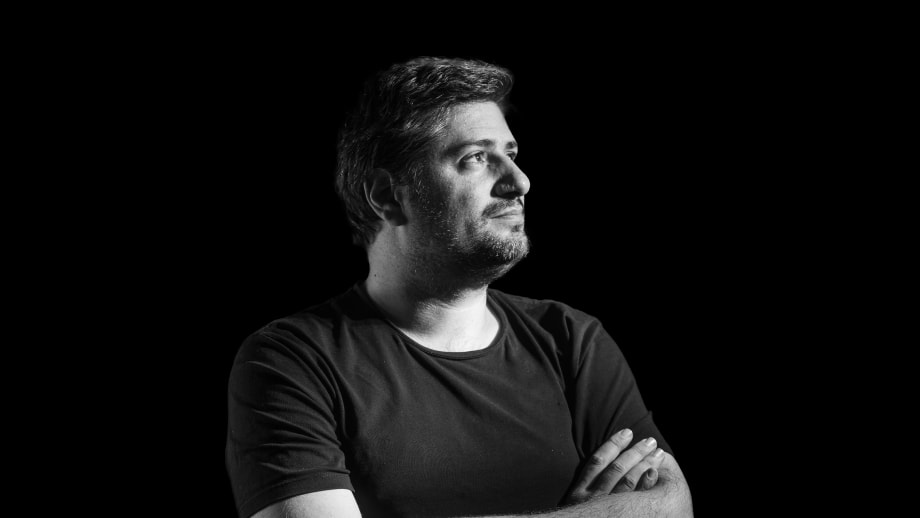
Mariano Serkin: “We created Isla as an agency that develops talent”
Together with partners Rodrigo Grau, Ariel Serkin, Solange Ricoy, and Ricardo John, Mariano Serkin leads Isla — an agency built on a model that integrates creativity, strategy, digital transformation, and data. Below is an excerpt from the full article published in the latest edition of Adlatina Magazine.
Serkin: “I believe ideas are still at the core of what we do, but in many cases they’re not what solves the client’s real problem.”
Isla officially launched in January 2018. An agency whose core lies in the strategic model of a business consultancy.
Today, a little over seven years since its founding, Isla has offices in Buenos Aires, Mexico (opened July 2021), and São Paulo (opened November 2021), and five partners: Mariano Serkin (CSO), Rodrigo Grau and Ariel Serkin (CCOs), Solange Ricoy (CEO of Alexandria Group), and Ricardo John (CEO).
“It helped me a lot to experience the transition of a company going from having many networks to becoming a giant group,” says Serkin, who before founding Isla led the creative direction of Del Campo S&S for eight years alongside Maxi Itzkoff, and later served as CCO of Saatchi & Saatchi Europe, based in Madrid. “That transition helped me understand that sometimes the place ideas occupy does not reflect the full potential of the business from an advertiser’s perspective,” he adds.
“From there, I went to study at MIT for almost a year and returned with the idea of building an agency that used the methodologies of a business consultancy. That’s why, along with Rodrigo and Ariel, we brought in Solange, who is the former global CMO of Unilever. Why do I think that perspective is essential? Because I believe ideas remain at the center of what we do, but in many cases they are not what solves the client’s problems,” Serkin explains.
This is how Isla was born — as a response to the need for an agency with the kind of methodological mix that could support clients even in moments of recession, volatility, or devaluation. “It’s about being ready to sit down with a CMO, but also with a CEO,” says Serkin. “Why did we build it this way? Beyond the fact that it was something I was truly passionate about, this approach would give us the conversations needed to solve the problems these brands face and allow us to occupy a relevant place as an agency.”
Arrival in Mexico
In a time when the world was slowly moving on from the uncertainty of the Covid pandemic, Isla opened its Mexico City office. Approaching its fourth anniversary, Isla Mexico has had a standout 2024, being named Agency of the Year at the local Effie Awards and the top independent agency at the Effie Latam Awards, with recognized and awarded campaigns for brands including Marías Gamesas, Doritos, and Flamin’ Hot (PepsiCo), among others.
“We decided to open in Mexico and I moved there with my family,” says Serkin. “At that time, I imagined that — just like at Del Campo, where we helped develop many industry leaders in various markets — Isla could become an agency that develops talent, but in a contemporary way, with the skills needed today and in the future.”
What was Isla Mexico created for, and where do you feel it stands today?
“We set short-term goals. Specifically, when I arrived in Mexico, I approached it differently. I asked myself how I could build a place that is good for Mexican talent and has long-term impact. I’ll put it this way: a place where, years from now, when we see many people leading different agencies, all those people met at Isla. That Isla helped develop that talent. I also saw it that way to keep our goals in a healthy place: not everything revolving around winning business, but also around how my presence here can help many people shape their careers.”
It’s a noble goal. But how was the market’s reception at first? How do you avoid the perception of “the foreigner who comes to tell us how to develop talent”?
“I think that when you build a place, you’re present, you pay the taxes you’re supposed to pay (which are a lot), and you train many people — when everyone sees you working, and sees that what you’re doing is beneficial for the market, that you compete under fair rules — I believe the market slowly lets go of preconceptions. That’s why, when we arrived, we thought it was key to be audited by Great Place to Work. We are now GPTW for the third consecutive year. That puts an even greater responsibility on us. That was my mindset: I have to be better. I have to be even more transparent than anyone else.”
Since Isla’s foundation, there has been a noticeable shift from the creative Mariano Serkin to a more strategy-focused one. What was that transition like?
“To begin new paths, you have to let go of ego and be willing to learn almost from scratch. Moving to a new country requires learning from scratch. Shifting from a heavily creative mindset to a strategic one as well. I was beginning to get used to that — and everything it implies: you become more humble, more grounded, more willing to listen.”
Is that also why you decided to relocate to Mexico?
“Sometimes you learn from different places. When I was in Europe working for many markets, I learned that you have to be physically present. There was a time when you could make advertising work from anywhere, but now we’re in a moment where, if you’re going to create work for a specific place, you need to be there, live it. When you work with people, closeness matters. It’s still a business built on relationships. Presence matters — for client relationships, but also because if our goal was to develop talent, there was no other option but to be there.”
What is the market situation like today? How does the political-economic context of the United States affect the industry?
“With Trump’s arrival and the whole tax war, we experienced a sort of mini-recession that affected sales across many categories. It’s a very volatile time globally, where long-term planning is difficult. If brands used to think in terms of long, medium, and short term, today we only think medium and short. Long-term is almost too much.”
How do you support brands in this context?
“This is where the mindset of a business consultancy comes into play. That’s what we built with Rodrigo, Ari, Sol, and Ricardo. Thinking from a brief, but also thinking before the brief. That’s what has helped us now, in a moment when many brands across categories can’t meet business goals due to market realities. As an agency, we can be valuable because we can have conversations that go far beyond creativity. Ideas and creativity are still at the center of what we do, but when an agency can participate in business discussions, its relevance grows. It’s about being almost an extended team for the client. And for that, you need people willing to work beyond the scope — people with the flexibility and ability to truly help the client. So part of success is simply being there. I’d say eighty percent of success is presence — in many things.”